
First in a series: The Origin Stories Behind Our Spirits
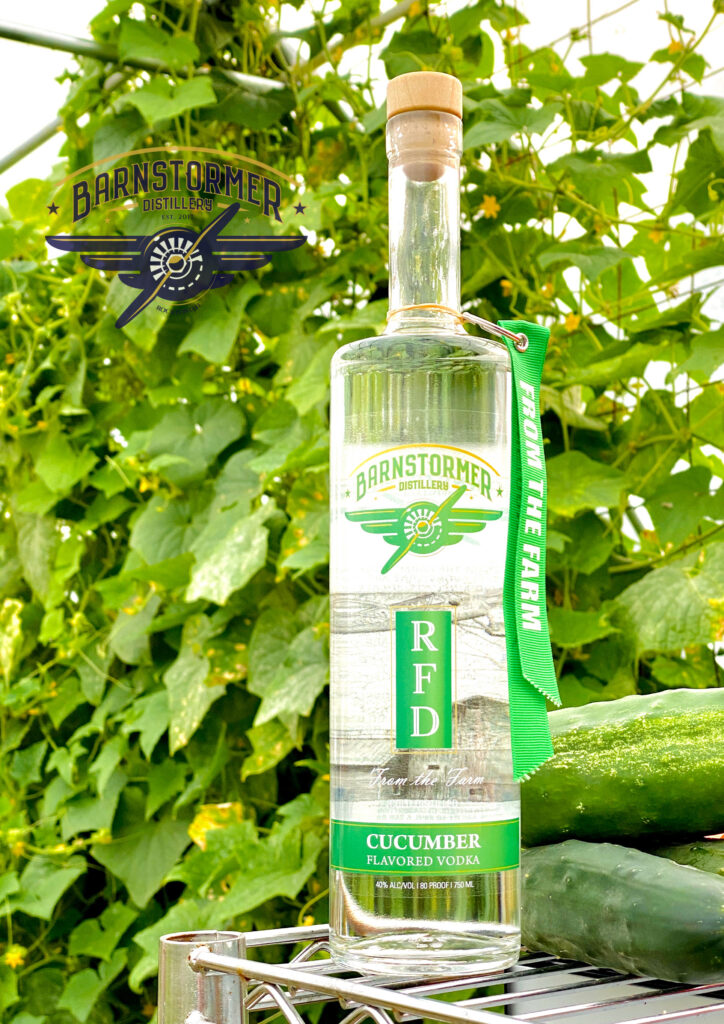
We can’t claim we invented cucumber vodka. But we’ll stand behind this: we do it better than anyone else. No artificial flavors, no extracts, no shortcuts. Just corn and cucumbers.
The story of how we got there is entirely our own.
A Road Trip That Went Nowhere (And Changed Everything)
It was 2018. We were getting close to opening and needed a sourced aged whiskey to sell while our own barrels matured. We’d made up our minds early that we weren’t going to do what 90% of the craft industry was doing — pulling from that well-known large distillery in southern Indiana and calling it their own. We wanted something different.
That search took us to the Raleigh-Durham area to sample whiskey from a small producer. That visit was a bust, which left us with a day to kill before our flight home. We did what any curious distiller would do: we found every other distillery in the area worth visiting.
That’s how we ended up at Durham Distillery in Durham, NC. If you’re ever in that part of the country, it’s worth the stop.
On the tour, we were introduced to something we’d never seen before — a contraption called a rotary evaporator, or rotovap. It looked like it had come straight out of a science laboratory. (Because it actually had.) Among other things, they were using it to extract fresh cucumber flavor at low temperatures, without heat, without cooking anything. The result was a cucumber vodka that tasted like biting into a fresh cucumber.
Addie fell in love with the cucumber vodka on the spot. She bought a bottle. (Actually two, I think.) We flew home, put the bottle in an honored place, and got back to work.
Then Came COVID
We don’t need to relitigate 2020 here — that’s a blog post for another day. But what we can tell you is that Addie’s bottle of Durham cucumber vodka was slowly disappearing, and there was no replacing it. With nothing else to do, I stared at the abundance of cucumbers sitting on the kitchen table from our huge garden.
I was between projects, surfing the internet, and stumbled across a small rotovap for sale.
Why not give it a try?
The Kitchen Situation
The unit arrived. The only paperwork inside the box was in Chinese. No English instructions. Not even a photo showing how it was supposed to look assembled.
I set it up as best I could on the kitchen table. That early prototype used buckets of water and mountains of ice for cooling. More than once, I got the floor wet. The dogs loved to play with the dropped ice cubes, but every time Addie stepped in a puddle of water, she gave me a look that required no translation. She had already banished my original stovetop still from her kitchen years earlier, and here I was, invading again with a mystery machine assembled from a Chinese parts diagram.
She was not pleased, but equally intrigued.
The Experiments Begin
After several failed attempts to even get the machine running, I finally got consistent drips into the condenser catch. No guidance on temperatures, pressures, or ratios — so I built one. I started a test log, documenting every run: different amounts of cucumber, different alcohol-to-water ratios, different pressure and temperature settings.
Some runs extracted more flavor. Some had stronger aroma. Some had both and some had neither. I narrowed it down methodically, the same way you’d work through any unfamiliar system — document everything, change one variable at a time, don’t trust your instincts until the data backs them up.
After a few days, I had a result I thought was right. But I wasn’t the one who needed to believe it.
The Blind Taste Test
I poured my liquid into one unlabeled glass. I poured Addie’s remaining Durham Distillery cucumber vodka into a second unlabeled glass. I set both in front of her and asked her to taste.
Addie loved these taste tests, but for me, they were pure torture.
In her usual meticulous way, she worked through both glasses. Multiple sips. Some faces. A long pause. Time ticked away, and I held my breath and almost passed out twice from lack of oxygen. Was she ever going to tell me her thoughts?
What I didn’t know at the time — and what she confessed later — was what was actually going through her mind:
The one on the right is just so much better. It tastes like biting into a fresh cucumber. The other one has flavor, but not the freshness. The better one has to be the one from the other distillery. What do I do — do I lie to Tim? Do I hurt his feelings? I’m sorry, but there is just no comparison, and I know it is not his.
After sitting with that for a moment, she made her call. She looked at me and said: “This one is the clear winner, and I know it’s not yours.”
She was pointing at my glass. Through the celebratory fireworks going off in my mind, I corrected her. At last, success.
From Kitchen Table to Five Rotovaps
There was still refining to do, but we had our first flavored spirit. I documented the complete process and submitted it to the TTB for formula approval. A few weeks later, we had it.
The next challenge was scale. That first rotovap produced enough flavor concentrate for one bottle at a time. We needed a plan for year-round production — especially through winter, when fresh cucumbers aren’t exactly growing in northern Illinois.
I remembered something from the Durham Distillery tour. I’d asked the guide how they handled their cucumber supply, and he mentioned they bought in bulk and just froze whatever they didn’t use immediately. Made sense. So as harvest season wound down on the farm and we found ourselves with a surplus of cucumbers, we did exactly that.
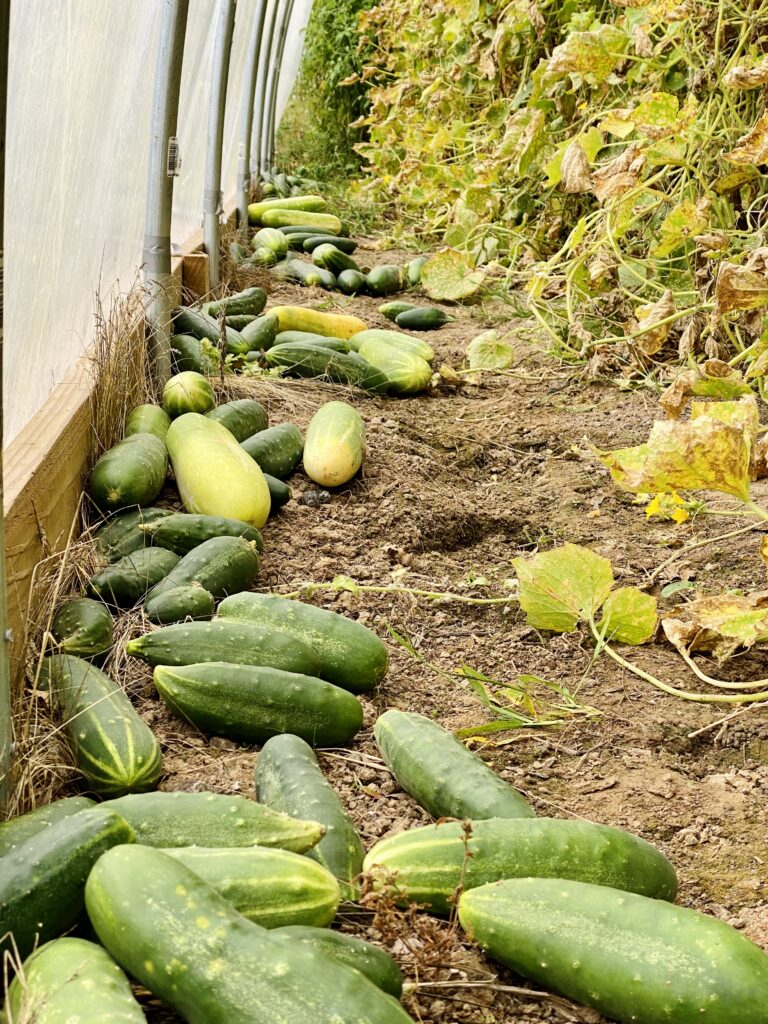
We filled a freezer. Then bought two more and filled those too. We were set for winter.
The first frozen batch was terrible.
Not subtle, not slightly off — terrible. Mushy. Flat. Like someone had blended a cucumber that had been forgotten in the back of a refrigerator for a month. None of the clean, bright, fresh character we’d worked so hard to get right.
I now had three freezers full of cucumbers I couldn’t use. And the quiet realization that maybe I should have run one test batch before committing to the additional appliances.
It turned out the guide’s advice — well-intentioned as it was — didn’t apply to what we were doing. Freezing breaks down the cell structure of a cucumber, and that breakdown changes everything about what the rotovap extracts. The process is sensitive precisely because it’s capturing something delicate. Fresh only. No shortcuts.
Those three freezers eventually found other uses. The process got better. And we learned something that’s now baked into everything we make: the ingredient has to be right before the technique matters.
Today we run five rotovaps of different sizes, and cucumber vodka has become our flagship — the spirit that represents what we do and why we do it differently.
Nothing artificial. Nothing fake. Just a process precise enough to pull the flavor of a fresh cucumber out of the air itself — as long as that cucumber was picked recently.
That’s how it started. A trip that went nowhere, a machine with Chinese instructions, a wet kitchen floor, a blind taste test, and three freezers full of a very expensive lesson.
We don’t regret any of it.
Sign up for Barnstormer Distillery
(Please be sure to check your Junk E-mail Folder if not received)
| Upcoming Events | View Full Calendar | See Our Spirits | Gift Cards Available | Tours | Custom Barrels | Contact

